Sorry, this activity is currently hidden
Library/reading area
Completion requirements
Library/reading area
Provide a quiet space that encourages children to engage with books. Include:
- comfortable seating
- a wide range of age-appropriate books
- related props (e.g. toys representing children’s favourite book characters)
- displays that reflect reading for enjoyment, for example, posters showing book characters, photographs of children reading their favourite books, children’s own artwork relating to their favourite books.

Choosing books
Books play an important part in children’s learning and development in early years. Reading books to children:
- develops essential pre-literacy skills that children need before they start to read and write, including understanding the purpose of reading and writing
- develops self-regulation skills as children learn to listen attentively
- builds children’s spoken vocabulary and language
- stimulates children’s imagination, curiosity and thinking skills
- promotes interpersonal relationships, empathy and attachment with adults when they read books together
- develops children’s understanding of themselves and other people
- develops children’s understanding of the world around them, giving them the opportunity to experience things in their imaginations before they happen in real life.
 |
Even before children can read for themselves, access to books through a library/reading area in your setting will help to promote lifelong appreciation of books. |
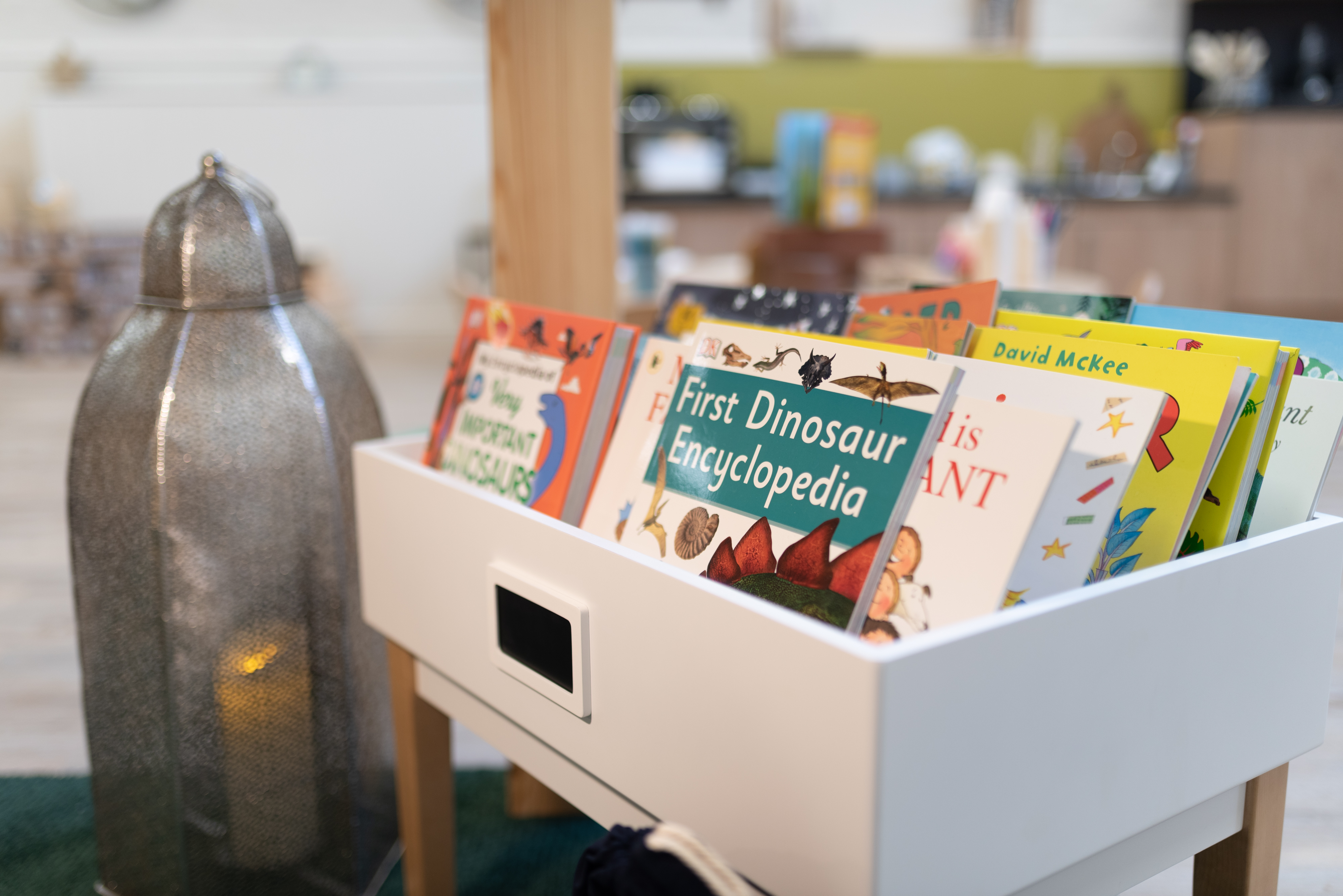
When you are choosing books to share with your children and to include in your library/reading area, consider including:
- a wide range of age-appropriate books to promote children’s interest in books and reading
- books that include positive messages about diversity and inclusivity of all kinds. For example, gender, race, culture, special needs, family
- dual language books, representing your children’s different home languages
- poems, rhyme and repetitive texts which encourage children to join in and support development of literacy skills
- a mixture of non-fiction and fiction texts
- books with motivating topics for your children that also reflect their real-life experiences. For example, going to the doctor
- books in different formats. For example, digital texts with static content, digital texts with interactive content, or audio texts
- picture books that encourage children’s storytelling
- decodable books for EY2 and EY3 that reflect their phonics learning.